Civic Assemblies
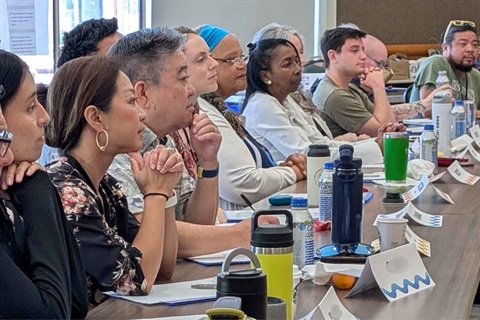
The City of Culver City recently completed its first Civic Assembly on how to increase public participation in the budget process. Civic Assemblies are part of the City’s broader effort to find new and meaningful ways to involve residents in important public decisions.
What is a Civic Assembly?
A Civic Assembly is a form of public participation designed to give residents the time, information, and support needed to consider a complex community issue in depth. Civic Assemblies can be used to explore issues ranging from housing and transportation to climate change, public space uses, budgeting, and other decisions that involve competing priorities or trade-offs.
Rather than asking only those who typically attend meetings or respond to surveys to participate, Civic Assembly members are selected through a civic lottery designed to create a group that broadly reflects the community.
Over a series of carefully facilitated sessions, Assembly members:
- Learn about the issue from subject-matter experts, community members, and other sources;
- Consider a range of perspectives and experiences;
- Weigh trade-offs for different ideas;
- Identify areas of agreement and disagreement; and
- Develop recommendations for City leaders to consider.
Why is Culver City holding Civic Assemblies?
The City wants to hear from more of the public and ensure that different perspectives are meaningfully represented in conversations about important City decisions. Civic Assemblies are one part of the City’s broader approach to public engagement and complement other opportunities for residents to participate in City decision-making.
Civic Assemblies are particularly useful for complex issues involving competing priorities or trade-offs. They give participants the time and information to explore an issue in depth, consider different perspectives, and develop informed recommendations through deliberation.
Through Civic Assemblies, the City aims to:
- Hear from a broader cross-section of the community;
- Create space for thoughtful and informed discussion;
- Better understand residents’ priorities and perspectives;
- Increase transparency around complex public decisions; and
- Provide City Council with community-informed recommendations.
How are participants selected?
Civic Assembly participants are selected through a process known as sortition, or a civic lottery.
For each Assembly:
- Approximately 10,000 invitations are sent to a randomly selected group of households.
- Residents who receive an invitation can volunteer to participate by completing a simple form. For some Assemblies, additional residents may also be invited to apply through an open application.
- From the pool of residents who respond, a lottery is used to select a group that broadly reflects Culver City across key demographic characteristics.
The selection process often uses Panelot, an open-source tool designed for civic lotteries, to help randomly select participants based on the demographic criteria established for the Assembly.
Why use this random selection approach?
Traditional public engagement opportunities are open to everyone, but the people who have the most time or interest to participate may not always reflect the broader community.
Random selection is designed to bring a broader cross-section of residents into the decision-making process, including people who may not typically attend City Council meetings, respond to surveys, or participate in other engagement activities. The goal is to create an Assembly that closely reflects Culver City’s population across characteristics such as age, race and ethnicity, geography, and other relevant factors.
What happens to the Assembly’s recommendations?
At the end of each Civic Assembly, participants develop recommendations for consideration by the City.
City staff work with the City Council to review the recommendations and identify what can be incorporated, what may require additional study or resources, and any factors that may prevent a recommendation from being implemented. The recommendations and the City’s response are shared publicly and presented to the City Council.
How is a Civic Assembly different from a board or commission?
City boards and commissions are ongoing advisory bodies whose members are appointed to serve for a set term and typically consider issues within a particular subject area.
A Civic Assembly is temporary and focused on a specific question. Participants are randomly selected through a civic lottery rather than appointed, with the goal of creating a group that broadly reflects the community. Once participants have completed their work and developed recommendations for the City Council to consider, the Assembly concludes.
Like boards and commissions, Civic Assemblies serve in an advisory role. They do not make policy or replace the decision-making authority of the City Council.
|
Civic Assembly
|
Board or Commission
|
|
How members are selected
|
Randomly selected through a civic lottery designed to broadly reflect the community
|
Appointed to serve by the City Council
|
|
Length of service
|
Temporary; concludes after its work is complete
|
Ongoing body with members serving set terms
|
|
Focus
|
A specific question or issue
|
An ongoing subject area or set of responsibilities
|
|
Role
|
Develops recommendations for City Council consideration
|
Advises the City Council within its designated area
|
|
Decision-making authority
|
Advisory; does not make City policy
|
Advisory; does not make City policy
|
Do participants receive any kind of compensation?
Yes. Civic Assembly members receive a stipend in recognition of the significant time they commit to participating in the process.
The City also works to reduce barriers that could prevent someone from participating. Depending on the Assembly, additional support may include meals, childcare or caregiving assistance, transportation, language access, or other accommodations.
Providing compensation and support helps make participation possible for residents who might otherwise be unable to commit the time required to serve on a Civic Assembly.
Where else have civic assemblies been used?
Hundred of civic assemblies and similar deliberative processes have been held around the world to help governments and communities address complex and highly contentious issues.
While newer in the US, the approach is well established in Europe.
Ireland is one of the best-known examples of using deliberative processes to address major national questions. Randomly selected residents have been brought together to consider issues including constitutional reform, marriage equality, abortion, climate change, biodiversity, and drug policy. These processes helped inform national debate on some of the country's most consequential social issues. Recommendations related to marriage equality and abortion ultimately contributed to questions being put before Irish voters in national referendums, resulting in the legalization of same-sex marriage in 2015 and the repeal of Ireland's constitutional ban on abortion in 2018.
France has convened three national Citizens’ Conventions, bringing randomly selected residents together to develop recommendations on climate change, end-of-life policy, and, most recently, how children’s school and leisure time should be structured to best support children.
Belgium has taken civic assemblies a step further by making them an ongoing part of government in some regions. In Ostbelgien, a permanent Citizens’ Council of 24 randomly selected residents helps identify issues and convene Civic Assemblies to develop recommendations. The process creates an ongoing role for randomly selected residents alongside elected representatives, rather than using civic assemblies only for individual issues.
Civic assemblies are also increasingly happening in the United States. Some examples include:
- Raleigh, North Carolina (2026): 40 residents participated in a Civic Assembly as part of the development of Raleigh’s next Comprehensive Plan. Participants considered how the City could improve access to frequent bus service and what neighborhoods served by that transit should look like.
- Fort Collins, Colorado (2025): 20 residents considered the future of the approximately 165-acre former Hughes Stadium site and developed recommendations for the City Council. The City Council subsequently expressed support for the Assembly’s recommendations and adopted a conceptual framework for the site based on them. The ordinance was referred to voters, who approved it in November 2025.
- Deschutes County, Oregon (2024): 30 residents came together over five days to consider how the community could prevent and end youth homelessness. The Assembly developed 23 recommendations that received at least 75% support, with Deschutes County and the City of Bend committing to review and publicly respond to the recommendations.
- Petaluma, California (2022): 36 residents spent nearly 90 hours considering the future of the 55-acre city-owned fairgrounds property. The Assembly developed recommendations outlining guiding principles, potential uses, and preferred visions for the site, which were presented to the City Council and Fair Board.
Culver City Civic Assemblies
Learn more about each Civic Assembly, including the question participants considered, how the Assembly was conducted, the recommendations developed, and what happened next.
Upcoming Civic Assemblies
Information about future Civic Assemblies will be posted here as planning progresses.