"A Frame for a Tree" Takes Root
What is 'A Frame for a Tree'?
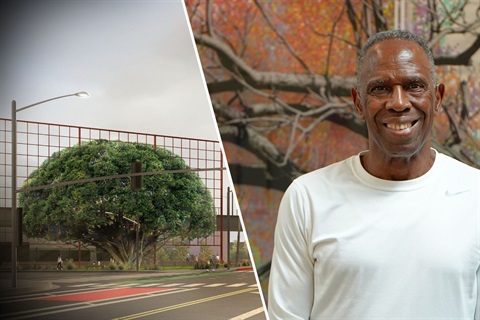
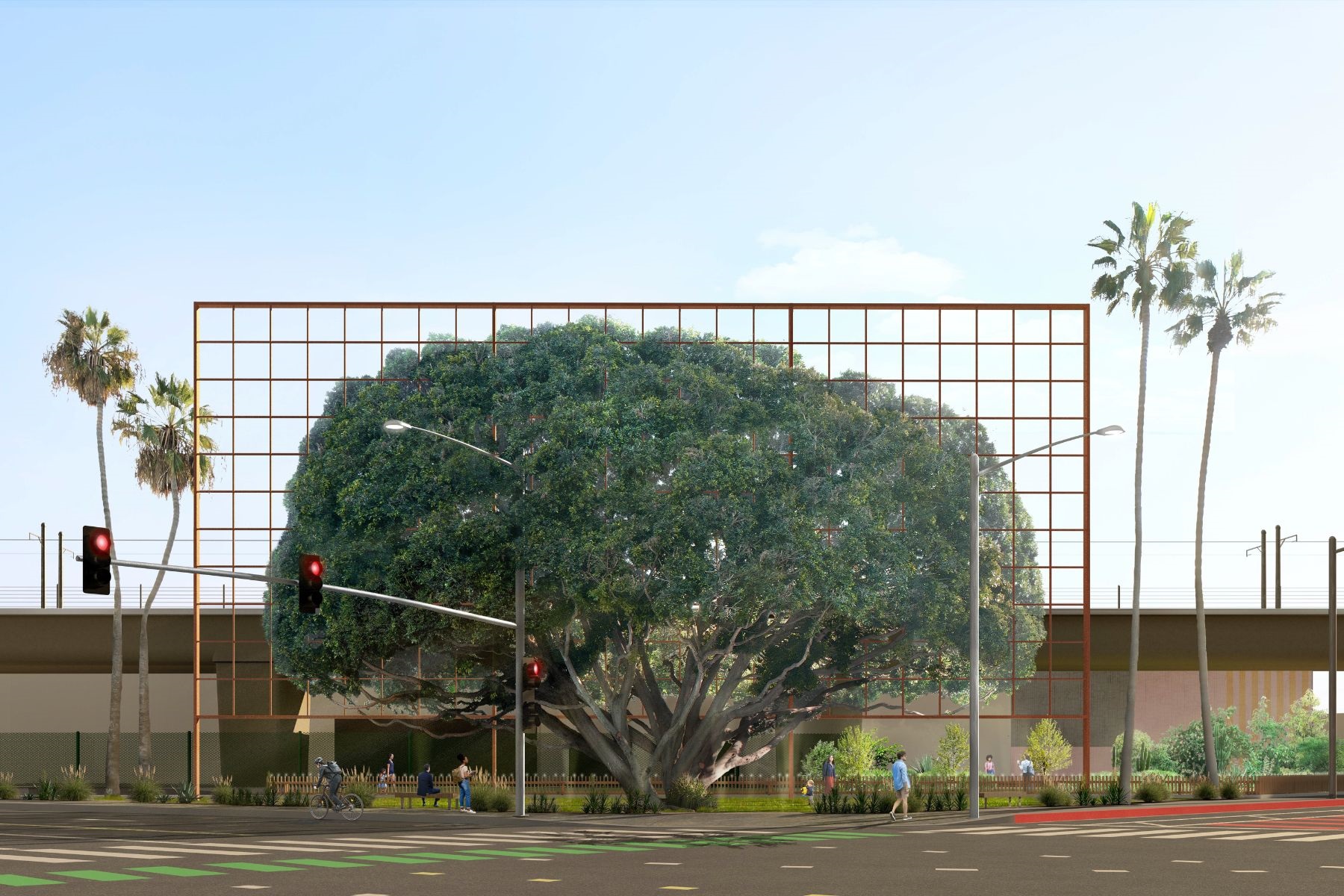
Created by world-renowned conceptual artist and composer Charles Gaines, 'A Frame for a Tree' is a landmark public art installation that explores the intersection of systematic logic, natural forms, and public space. By enclosing a mature Ficus tree within an architectural grid structure, the monumental artwork invites viewers to engage with nature, urban history, and the surrounding streetscape through a new lens. The City of Culver City is proud to feature this transformative work as a signature visual gateway for our community.
Esteemed art consultants Dyson & Womack, who have managed over 60 public artworks and 350 public art programs, will oversee 'A Frame for a Tree' during its final fabrication and installation phase. The consulting firm is known for its expertise and reputation in realizing world-class, contemporary public art projects. Dyson & Womack was selected for this role by the City Council based on recommendations from the Cultural Affairs Commission and its Public Art Subcommittee.
Project at a Glance:
- Location: Intersection of Washington Blvd & National Blvd (TOD District Gateway)
- Installation Schedule: Begins Tuesday, September 8, 2026; ~6 Weeks Duration
- Traffic Impact: No major road closures; brief localized slowdowns during early morning equipment load-ins
- Tree Health: On-site supervision by Certified Master Arborist throughout all structural lifts
(Rendering by TOLO Architecture)
Important Information:
Who is Charles Gaines, and why is his selection significant for Culver City?
Charles Gaines is a globally recognized pioneer of Conceptual Art and longtime CalArts professor whose career spans over 50 years. His work is held in the permanent collections of major global institutions, including MoMA, the Whitney, and the Tate Modern. Bringing a monumental public work by an artist of his stature elevates Culver City as a major cultural destination in Southern California.
What is the artistic concept behind 'A Frame for a Tree'?
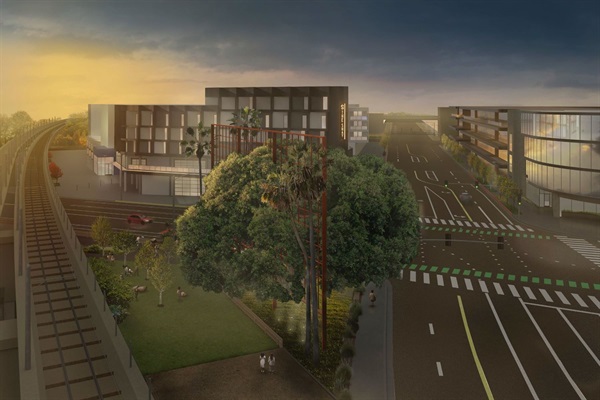
Since the mid-1970s (starting with Walnut Tree Orchard and Numbers and Trees), Gaines has used trees as central subjects to explore how mathematical systems and organic nature interact. The sculpture acts as an architectural screen or 'viewfinder' that poetically frames the living Ficus tree and surrounding urban landscape from street level, nearby buildings, and passing Metro Expo Line trains.
How was this artwork chosen for this location?
The Washington & National TOD site (formerly Hal Roach Studios) was designated for a major gateway artwork in 2016. An expert Art Selection Panel and the Cultural Affairs Commission evaluated top-tier artist proposals in a competitive, multi-year process before selecting Gaines.
Is the artwork lit at night?
Yes. The design includes subtle, low-voltage architectural accent lighting that illuminates the artwork grid and tree canopy at night without emitting harsh outward glare for drivers or neighboring properties.
(Rendering by TOLO Architecture)
Is the mature Ficus tree going to be harmed, trimmed down, or killed during construction?
No. Preserving and protecting the mature Ficus tree is the primary directive of the entire project. Certified Arborist Peter Ashley has been embedded in the project team since Phase 1 and will remain on-site during active structural lifts and foundation work.
How were root and canopy damage prevented during design?
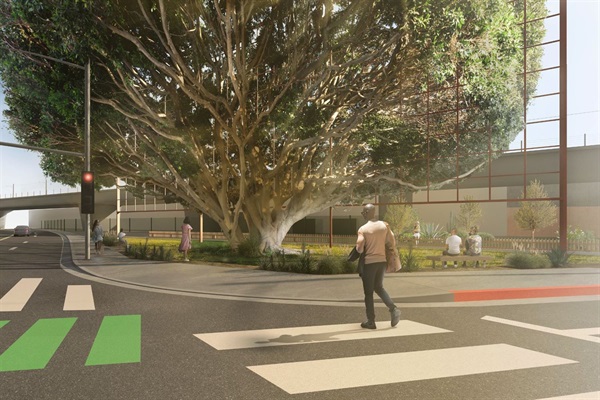
The structural footings were specifically engineered to avoid the Root Protection Zone (RPZ). Furthermore, 3D spatial modeling was used to calculate the frame's structural dimensions so that it clears the existing canopy without damaging major branches.
What happens as the Ficus tree grows over the next 10 to 30 years?
The metal grid structure is designed with generous internal clearance tolerance to accommodate the natural biological expansion of the trunk and canopy over decades. Bi-annual arborist reviews are integrated into the city maintenance plan.
(Rendering by TOLO Architecture)
Will Washington or National Boulevards be closed during installation?
No. All primary traffic lanes remain open throughout the 6-week project. Intermittent shoulder shifts or brief flagger controls occur only during early morning load-in hours (8:00 AM – 8:30 AM) when heavy crane equipment is maneuvered into position.
How will local private school drop-offs be affected?
Direct advisories were delivered to administrators at local private schools. Parents driving through the Washington/National corridor during morning drop-off hours (8:00 AM – 8:30 AM) are encouraged to build in a 5 to 10 minute buffer or use alternate routes.
Is taxpayer money paying for this project?
Zero General Fund taxpayer money is used. The project is funded entirely through the Culver City Cultural Arts Fund (developer art impact fees earmarked strictly for public art by law).
Questions or Neighborbood Inquiries? Please contract the Culver City Cultural Affairs Division via email cultural.affairs@culvercity.org or phone: (310) 253-6003